Nist Program Priorities

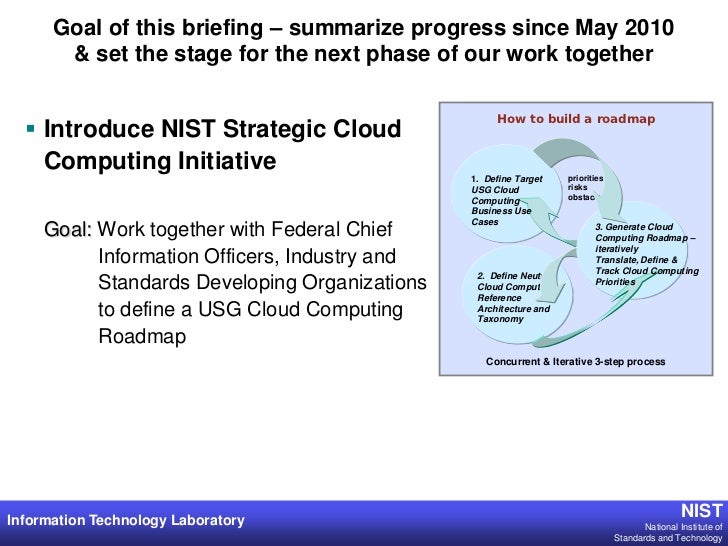
The National Institute of Standards and Technology (NIST) was founded in 1901 and is now part of the U.S. Department of Commerce. NIST is one of the nation's oldest physical science laboratories. Congress established the agency to remove a major challenge to U.S. Industrial competitiveness at the time—a second-rate measurement infrastructure that lagged behind the capabilities of the United Kingdom, Germany, and other economic rivals. From the smart electric power grid and electronic health records to atomic clocks, advanced nanomaterials, and computer chips, innumerable products and services rely in some way on technology, measurement, and standards provided by the National Institute of Standards and Technology. Today, NIST measurements support the smallest of technologies to the largest and most complex of human-made creations—from nanoscale devices so tiny that tens of thousands can fit on the end of a single human hair up to earthquake-resistant skyscrapers and global communication networks.
Cybersecurity and technology transfer seen as top priorities for NIST director nominee By Sep. 18, 2017, 3:25 PM President Donald Trump has nominated Walter Copan, an expert in technology transfer, to be the director of the National Institute of Standards and Technology (NIST), which supports physical sciences research and operates labs in Gaithersburg, Maryland, and Boulder, Colorado.
Information Security Guide for Government Executives provides a broad overview of information security program concepts to assist senior leaders in understanding how to oversee and support the development and implementation of information security programs.
The 63-year-old Copan is a Ph.D. Chemist and president and CEO of the Colorado-based Intellectual Property Engineering Group. He says his top priority for the agency is to implement the Cybersecurity Framework, a NIST-led effort to improve network security across federal agencies as well as industry.
“I think we all see cybersecurity as national security and economic security,” Copan says. He also wants to make sure security improvements benefit not just federal agencies and large corporations, but also smaller companies that can’t afford teams of information technology professionals. “Small- and medium-sized businesses are drivers of the economy. Statistics show that when [these businesses] are the victim of a cyberattack they go out of business in less than a year,” Copan says. Copan says he hopes to improve how small companies interact with government agencies to commercialize new technologies. “My personal priority is to find better ways [of] engaging with industry and finding partnerships.”. Walter Copan Courtesy of Walter Copan Technology transfer was his priority during stints at the National Renewable Energy Laboratory in Golden, Colorado, and Brookhaven National Laboratory in Upton, New York.
Garmin bluechart g2 us coastal. >> > In this case it is stealing a company s product by using illegal keygen > provided unlock codes to avoid paying for them.
While at Brookhaven, Copan spearheaded a pilot program across the Department of Energy (DOE) called Agreements for Commercializing Technology. The program has been praised for making intellectual property agreements between businesses and DOE more flexible, and for promoting an entrepreneurial culture. That has made Copan’s nomination a popular choice.
“I think it’s a great selection,” says Richard Rankin, director of innovation and partnerships at Lawrence Livermore National Laboratory in California, one of three DOE weapons laboratories. Catherine Sohn, nonexecutive chairperson of BioEclipse Therapeutics in Milpitas, California, praises Copan’s work with the Licensing Executive Society, a group of intellectual property professionals. “I found him to be an inspiring, visionary leader with a keen understanding of the importance of advancing and protecting intellectual property,” she says. Copan’s nomination was sent to the Senate on 14 September. If confirmed, he will replace Kent Rochford. He has served as NIST’s acting director since Willie May retired in January, although his permanent position is running the agency’s laboratory programs.