Escala De Heces De Bristol Pdf
(1)University Dept. Of Medicine, Bristol Royal Infirmary, UK. BACKGROUND: Stool form scales are a simple method of assessing intestinal transit rate but are not. The Bristol stool scale, Bristol stool chart (BSC), Bristol stool form scale, or BSF scale is a medical aid designed to classify the form of human feces into seven. Destaca la “Escala de Bristol para Consistencia de Heces”-EBCF (Bristol Stool Form Scale) que fue desarrollada y.
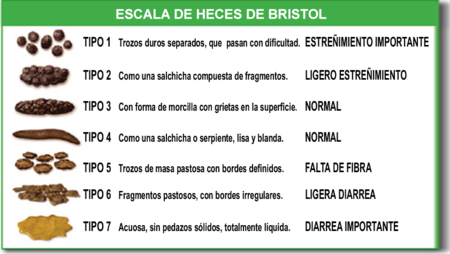
Bristol stool chart Purpose classify type of feces(diagnostic triad for irritable bowel syndrome) The Bristol stool scale is a diagnostic tool designed to classify the form of into seven categories. It is used in both clinical and fields.
This utility contains the only official version for Onair PC Card (INT) Driver for Windows XP/7/Vista/8/8.1/10 32-bit and 64-bit versions. Onair solution usb hdtv-gt driver download. This tool will install you the latest drivers for all devices on your computer. With just one click you can update the driver as well as the rest of the drivers in your system, such as: • Monitors • Audio & Sound • Graphics & Video Adapters • Modems & Network Adapters • Printers • Scanners • Optical Disk Drives • Other Devices This utility works in two simple steps: 1. Automatically identifies your Hardware. Supported OS: Windows 10, Windows 8/8.1, Windows 7, Windows Vista.
It is sometimes also referred to as the Bristol stool chart ( BSC), Bristol stool form scale, or BSF scale. It was developed at the as a clinical assessment tool in 1997, and is widely used as a research tool to evaluate the effectiveness of treatments for various diseases of the bowel, as well as a clinical communication aid; including being part of the diagnostic triad for. See also: and Patients with or irritable bowel syndrome typically report that they suffer with abdominal. In some patients, chronic constipation is interspersed with brief episodes of; while a minority of patients with IBS have only diarrhoea.
The presentation of symptoms is usually months or years and commonly patients consult different doctors, without great success, and doing various specialized investigations. It notices a strong correlation of the reported symptoms with; indeed diarrhoeal discharges are associated with. IBS blood is present only if the disease is associated with. Research conducted on irritable bowel syndrome in the 2000s, and the gastrointestinal complications of have used the Bristol scale as a diagnostic tool easy to use; even in research which lasted for 77 months. Wii go vacation iso jpn torrent. Historically, this scale of assessment of the faeces has been recommended by the of Medical Care Program (, ) for the collection of data on functional bowel disease (FBD). More recently, according to the latest revision of the, six clinical manifestations of IBS can be identified: Subtypes prevalent presentation of stool in IBS according to the Rome III Criteria 1.
IBS with constipation ( IBS-C) - lumpy or hard stools * ≥ 25% and loose (soft) or watery stools †. Graphical representation of four presentations notes of IBS, and the role of percentage of stool consistency of types 1 and 2 (, ordinate) and of types 6 and 7 (, abscissa) according to the scale of Bristol In 2007, the in (), reported a piece of conducted on a population of 4,196 people living in (), in which participants were asked to complete a questionnaire based on the Bristol stool scale.
BACKGROUND: Stool form scales are a simple method of assessing intestinal transit rate but are not widely used in clinical practice or research, possibly because of the lack of evidence that they are responsive to changes in transit time. We set out to assess the responsiveness of the Bristol stool form scale to change in transit time. METHODS: Sixty-six volunteers had their whole-gut transit time (WGTT) measured with radiopaque marker pellets and their stools weighed, and they kept a diary of their stool form on a 7-point scale and of their defecatory frequency. WGTT was then altered with senna and loperamide, and the measurements were repeated. RESULTS: The base-line WGTT measurements correlated with defecatory frequency (r = 0.35, P = 0.005) and with stool output (r = -0.41, P = 0.001) but best with stool form (r = -0.54, P.